The automated motor production line represents an effective integration of human and machine, fully demonstrating the flexibility of the equipment. By combining conveyor systems, workpiece fixtures, specialized in-line machinery, and testing equipment, it meets the assembly requirements for various motor models and enables fully automated motor assembly.
Routine maintenance is essential; neglecting it can reduce production efficiency and shorten the service life of the automated motor production line. Operators are the primary users of the line. To ensure its proper operation, operators are required to perform the following tasks daily:
1. Before starting work, check the line for accumulated materials, tools, or debris, and ensure no foreign objects are stuck to the chain, which could impede normal operation.
2. Inspect electrical control components for signs of burning and verify that the emergency stop button is in the correct position to allow startup and operation.
3. Check that all protective guards and covers are functioning correctly. Cycle through each axis across the full range of motion to observe the smoothness of operation and other relevant functions.
4. Maintenance personnel should conduct regular inspections. Check for abnormal heating in control cabinets and motors, unusual noises or odors, and correct pressure gauge readings. Inspect pipelines and fittings for leaks, verify proper lubrication, and proactively prevent faults or accidents by addressing any anomalies immediately.
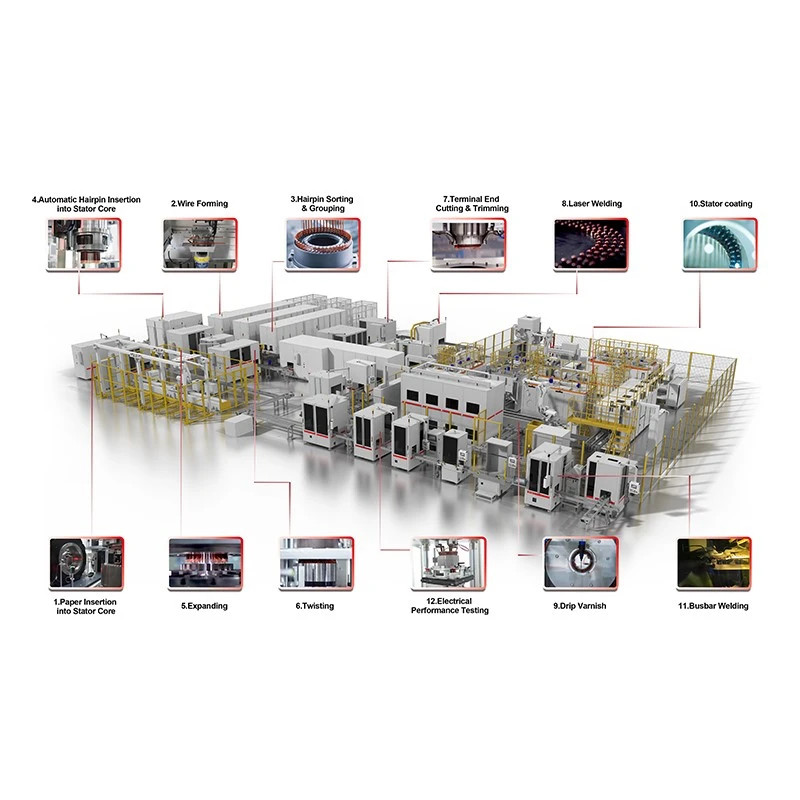
5. Proper use of the automated motor production line is key to minimizing equipment failures and extending service life; it plays a crucial role in preventive maintenance. Statistics show that one-third of equipment failures are caused by human error, while routine maintenance tasks-such as lubrication, cleaning, and inspection-are typically performed by operators. The solution lies in raising awareness regarding equipment management, usage, and maintenance, as well as strengthening operational and technical training to improve operator competence.
6. Shut down the machine at the end of the shift and clear away any debris or waste accumulated in the various work zones of the line. In particular, ensure that materials, tools, or waste do not fall into the chain mechanism, as this could disrupt operation, cause damage, or lead to accidents.